
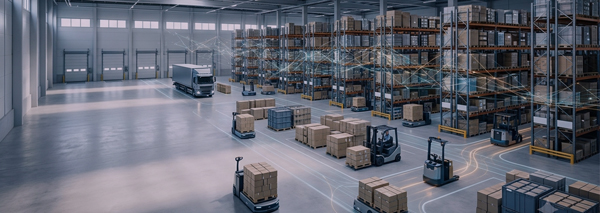
If you have ever been in a warehouse, you would notice that one product everyone wants may suddenly run out of stock, while the shelf next to it is packed with goods that no one has touched in weeks or months. This itself explains how messy supply chains can get at times. While spreadsheets and gut feeling can come in handy, they aren’t enough. This is where ai supply chain planning software can help, and let’s be honest, it is less intimidating than it sounds.
In this post, we will have a look at what AI can do when implemented the right way in supply chain management. We will also look at the actual supply chain benefits you can achieve, and use cases that you should pay attention to.
Why Do Supply Chains Need AI Now
Before we understand why, let us look at the different segments and factors involved in the supply chains. Suppliers in different countries, shipping delays, changing customer demand, rising costs, and weather that refuses to cooperate. One small issue in one place can quickly snowball into a bigger issue somewhere else.
Traditional planning tools work off fixed rules and old data. They can tell you what happened last month but they’re not so good at predicting what is going to happen next week. AI changes that because it learns from patterns, spots things humans miss, and updates its predictions as new information comes in.
The Key Benefits of AI in Supply Chain Management
Let’s begin with a broad overview. These are typically the first things that teams discover when AI is implemented in supply chain management.
Better forecasts – AI analyzes past sales data, considers seasonal patterns, promotional offers, market trends, and even weather conditions to forecast demand.
Lower costs – With the right amount and the smart way of moving goods you save money on storage costs, rush shipping and wasted goods.
Faster decisions – Rather than a weekly report, your team knows what’s happening in real-time, and can take action immediately.
Fewer surprises – If a supplier is late for delivery or be it a port issue, AI can identify this issue and alert you early, instead of last minute.
Happier customers – Orders are processed on time, products that are in demand are always on stock and no one has to follow up on updates. This is what customers care about.
Use Case 1 – AI Inventory Optimization
Managing the inventory can be quite challenging at times. If you order too much stock, and the inventory is not sold as expected your cash is just stuck on the shelves. Too little stock can lose you sales. The perfect balance can be stuck with the help of AI inventory optimization where you can find that sweet spot for every product, in every location.
How this works is quite simple. The system can help you determine how quick the item may well, delivery time from suppliers and the fluctuations of demand with seasons. It then recommends the reorder quantity along with when it needs to be done. It can even suggest transferring stock from one warehouse to another before the stock runs out.
We can understand this by studying a scenario of a seller who sells winter jackets. When using the AI inventory optimization, the system notices that cold weather is arriving earlier in one region, so it shifts stock there ahead of time. There would be no panic or empty racks, and such small wins add up well over a year.
Businesses that use the AI tools in supply chain management can easily reduce excess stock as well as stockouts at the same time.
Use Case 2 – Supply Chain Risk Management Software
Risk is the part nobody likes to think about until it hits. The supply chain risk management software employs AI to monitor and track factors that are beyond a company’s ability to monitor personally. Some of these can include price fluctuations, geopolitical events, natural disasters, port delays, and the financial stability of the supplier.
Now look at it practically. Say one of your suppliers is located in an area that is experiencing floods. The software identifies the news, determines which of your products are dependent on that supplier, and notifies your team. It can even recommend alternate providers so that you can take action before the shelves are empty.
It is the early warning that is really important. A storm may happen, but supply chain risk management software can give you enough time to respond rather than react. And in this business, a few days of notice can save a lot of money and a lot of stress.
Other Use Cases Worth Knowing
AI isn’t limited to those the above-mentioned use cases. Here are a few more places where it’s making a real difference.
Route optimization – AI can help you find faster, cheaper delivery routes based on traffic, fuel costs, and delivery windows.
Warehouse automation – Smart picking, robots, and layout suggestions speed up order fulfilment.
Supplier evaluation – It can score suppliers on quality, delivery history, and reliability, so choosing partners feels less like a coin toss.
Predictive maintenance – Sensors and AI warn you before a machine breaks down, so production doesn’t grind to a halt.
How to Get Started Without Overcomplicating It
You don’t need to overhaul everything on day one. There is always a simple way to start.
Start with one problem – Pick the pain point that costs you the most, like stockouts or late deliveries.
Check your data- AI is efficient when the data it learns from is good. So, you can start by rechecking the records first.
Run a small pilot – Test with one product line or one warehouse before rolling it out everywhere.
Bring your team along – Show people how the tool helps them, so it feels like support and not a replacement.
Measure and adjust – Track things like forecast accuracy, stock levels, and delivery times, then tweak as you go.
Final Thoughts
AI in supply chain management isn’t about replacing people. It’s about giving them better information, faster, so they can make smarter calls. Be it AI inventory optimization, exploring AI supply chain planning software, or investing in supply chain risk management software, the goal remains the same – fewer surprises and smoother operations.